Notice: Function _load_textdomain_just_in_time was called incorrectly. Translation loading for the all-in-one-seo-pack domain was triggered too early. This is usually an indicator for some code in the plugin or theme running too early. Translations should be loaded at the init action or later. Please see Debugging in WordPress for more information. (This message was added in version 6.7.0.) in /home/ue3sz8xj/public_html/wp-includes/functions.php on line 6170 Security | Digi Life Enabled
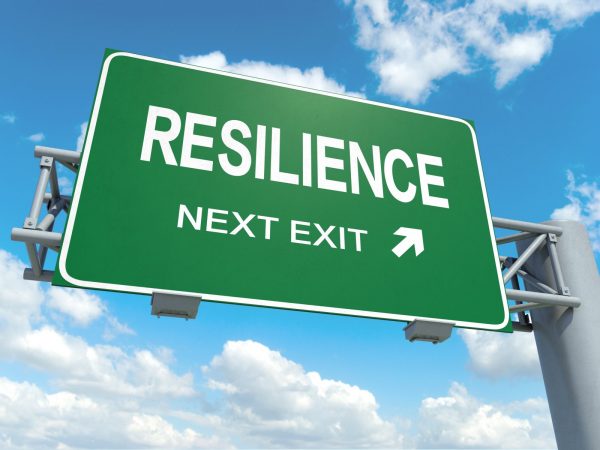
This week we focus on resilience-enhancing behaviours that support Personal & Business Resilience in Times of Crisis. We wanted to share these particularly in light of the pandemic Covid-19 Coronavirus. These are evidence-based activities that can benefit everyone physically, mentally and spiritually, and are principles we have found beneficial in our own lives.
Click on the video below to watch
The first of these is practicing gratitude. This can take the form, of setting aside time (a few minutes is enough) each day to reflect on a few things for which we’re thankful. And some research suggests that if we include in our lists social activities or something about relationships, the benefit is even greater. Our family tries to do this together every night before bedtime: each of us names three things we’re grateful for that happened in the past 24 hours. It shifts the focus from negative to positive and helps create perspective.
The second resilience-enhancing activity is engaging in daily physical exercise. You might first think of running or swimming, strenuous exercise, which is great but not always feasible. Walking, going up and down the stairs, lifting weights, and just moving about rather than sitting at our desks for hours on end also contribute to a healthier body, mind, and spirit. We would caution against intensive exercise at this time (you know what intense is for you) as this can lead to a reduced immunity.
Thirdly, and equally important, is eating a healthy diet. It’s not always easy to eat right in times of crisis especially if we’re eating ‘on the go’ but if we plan our meals in advance we can choose and prepare nutritious foods, rather than default to quick fix sugary foods in the moment. It does our bodies tremendous good to eat the rainbow foods (foods of different colours) every day, so plan for a rainbow meal each day.
Fourthly, one of the best boosts to our immunity is free, its an activity called sleep. Now exercise and diet can help with the promotion and onset of this, but it’s important you make specific time for quality sleep as a lack of sleep will reduce your immunity. Now we have young kids and are often up in the night with them so understand we can’t always get that perfect night, however put a schedule in place for you and your family to ensure you give yourselves the best opportunity for collective sleep. Just as you set a guard and boundaries around your cash, set a guard and some boundaries around your sleep – the reality is, it’s more valuable.
Another very useful way to build resilience is to develop competence (the skills you need to do your job) and confidence (the knowledge that you can do it). At Digi Life Enabled, we’re committed to providing educational programmes and mentoring to enable you to develop confidence and competence in online digital skills.
If you haven’t already, then check out some of our free video series to get you started by clicking here, or if you have started, and you’d like some 1-2-1 tutorials, then drop us a line at info@digilifeenabled.com to arrange a free call with us.
In conclusion, one of the best-documented ways to enhance our resilience is tobuild and use social support. This means finding people in your personal and professional life whom you can talk to about what’s important to you (emotional support) and whom you can ask for help when you need it (instrumental support). We can do this through Skype, Facebook or other social media outlets, or good old phone, written, or in-person contact. Again, it’s been our pleasure to work through a number of work-life issues with our members and we want to reiterate drop us a line at info@digilifeenabled.com if you’d like to schedule a call with us at this time of crisis.
We also want to encourage our members to watch out for vulnerable members of their own communities. The elderly are some of the most vulnerable at this time, many are alone, and many don’t have ‘social media’ accounts to keep abreast of the latest developments or purchase things online. So think what you can do to check in and monitor those individuals at this time, as many will feel the isolation even more at this time.
Finally friends, we wish health and prosperity in the weeks ahead to you and those dear to you.
Global action is required to tackle the web’s “downward plunge to a dysfunctional future”, its creator Sir Tim Berners-Lee has told the BBC this week.
He made the comments in an exclusive interview to mark 30 years since he submitted his proposal for the web.
Clearly Sir Tim created the web with his own design intent for good, so it must grieve him deeply on a personal level to see that which he created for good, be abused.
In fact, it was our own aversion and concern over the ‘dark/bad’ side of the web that made us stay clear of it for so long.
We had looked at options for starting an online business from home because of the time and financial freedom the online business model offered, in particular it would lend itself to some of our overseas charity work, enabling us to generate an income 24/7 from anywhere in the world as long as we had a laptop and wifi (the good side to the web).
But, we were very skeptical about online scams, and so didn’t know who we could really trust to start off with in a virtual world.
At the same time we realised we were actually already living in our own ‘scam’ if we thought by carrying on in the same traditional economic system things would somehow magically change by themselves for the better.
So, we realised we had to take responsibility and action to leverage the many benefits the web offered, rather than just focus on the negative aspects, and we’re so glad we did.
In our world where we live, there is use and abuse of everything that was intended to be provided for our good. There’s nothing necessarily inherently wrong in anything, it’s whether we chose to use that ‘thing’ that ‘tool’ that ‘provision’ for good or for evil, that’s what really matters.
So, is the web a force for evil or good?
That really depends on each of us and our free choice.
One of my roles as a consultant over the years in what is now commonly called organisational resilience has been to come alongside Critical National Infrastructure businesses to identify threats/risks that an organisation may be vulnerable to, perform a gap analysis of organisational capacity and capability to deal with those threats/risks, then, identify opportunities for enhancement to enable a more resilient response.
I can share with you that regardless of the subject matter under review, the opportunities for enhancement identified came with the caveat that resilience is a journey not an end point. In other words, you can never be 100% resilient to all risks and threats, however, you can be more, or you can be less resilient than you are now. So, on the journey to resilience, I see my role as giving people a road map so that they can take the steps they need to becoming ‘more’ rather than ‘less’ resilient. It is however up to them whether they choose to take those steps or not.
So how does this apply to the small business owner, I mean, we can understand the large corporations taking organisational resilience seriously and going for ISO accreditation, but if you’re a sole trader already running or looking to start an online business, how does organisational resilience apply to you?
Well the first thing I would ask is, are you serious about starting/running an online business, or is it more like a hobby, something you’ll dip in and out of when you feel like it?
Only you can answer that question, but for those who are serious about running an online business, then all I can say is please do be serious about it, and do run it as you would any business, and that includes identifying threats and risks that you need to deal with.
The importance of your digital data
As an online business owner, think about how much you rely on your digital data, such as customer details, quotes, orders, and payment details. Now imagine how long you would be able to operate without that data?
You see, the truth is, all businesses, regardless of size, should take regular backups of their key data, and make sure that these backups are recent and can be restored. By doing this, you’re ensuring your business is more rather than less resilient, and can still function following an impact such as a flood, fire, physical damage, theft or other loss.
So to encourage you to be more rather than less resilient in your online business, here are 4 steps you can consider taking:
Step 1: Identify what data you need to back up
Your first step is to identify your essential data. That is, the information that your business couldn’t function without. Normally this will comprise documents, photos, emails, contacts, and calendars, most of which are kept in just a few common folders on your computer, phone, tablet or network.
Step 2: Keep your backup separate from your computer
Whether it’s on a USB stick, on a separate drive or a separate computer, access to data backups should be restricted so that they are not permanently connected (either physically or over a local network) to the device holding the original copy Ransomware (and other malware) can often move to attached storage automatically, which means any such backup could also be infected, leaving you with no backup to recover from. For more resilience, you should consider storing your backups in a different location, so fire or theft won’t result in you losing both copies. Cloud storage solutions are a cost-effective and efficient way of achieving this.
Step 3: Consider the cloud
You’ve probably already used cloud storage during your everyday work and personal life without even knowing – unless you’re running your own email server, your emails are already stored ‘in the cloud’.
Using cloud storage (where a service provider stores your data on their infrastructure) means your data is physically separate from your location. You’ll also benefit from a high level of availability. Service providers can supply your organisation with data storage and web services without you needing to invest in expensive hardware up front. Most providers offer a limited amount of storage space for free, and larger storage capacity for minimal costs to small businesses.
Step 4: Make backing up part of your everyday business
OK, so backing up is not a very interesting thing to do (and there will always be more important tasks that you feel should take priority), but the majority of network or cloud storage solutions now allow you to make backups automatically. For instance, when new files of a certain type are saved to specified folders. Using automated backups not only saves time, but also ensures that you have the latest version of your files should you need them.
Many off-the-shelf backup solutions are easy to set up, and are affordable considering the business-critical protection they offer. When choosing a solution, you’ll also have to consider how much data you need to back up, and how quickly you need to be able to access the data following any incident.
So do take those 4 small steps towards becoming more resilient online, and if this isn’t just a hobby for you, if you’re serious about getting professional mentoring for the whole lifecycle of online business principles by individuals who are themselves running successful online businesses, then why not set up your own FREE TRIAL account with the Six Figure Mentors by clicking here.
You’ll be able to explore the SFM system for 30 days, have a FREE 1-2-1 with a system consultant over the phone at a time convenient to yourself, and if during those 30 days you feel it’s not for you, then you can cancel at any time without any additional cost to yourself.